
We’ve stepped into 2026 and AI for social impact isn’t waiting politely in the future anymore. It’s already here. Breathing in the same rooms we do. Slipping behind the timetables of packed Jakarta lecture halls, threading through the crackling emergency radios of flooded Bangladeshi villages. Like a tireless night-shift worker who never asks for coffee, it’s quietly stitching itself into the small, stubborn routines that actually keep societies from falling apart.
Nonprofits that used to choke on paperwork. City offices buried alive under forms. They’re all leaning hard on agentic tools now—little digital beasts that swallow admin mountains whole so real people can finally lift their heads and do the work that actually changes something. You see the proof in grant spreadsheets that suddenly look less desperate. In voices on weekly calls that don’t sound exhausted anymore. This isn’t next year. It’s right now.
Table of Contents
The Positive Power of AI for Social Impact in Key Sectors
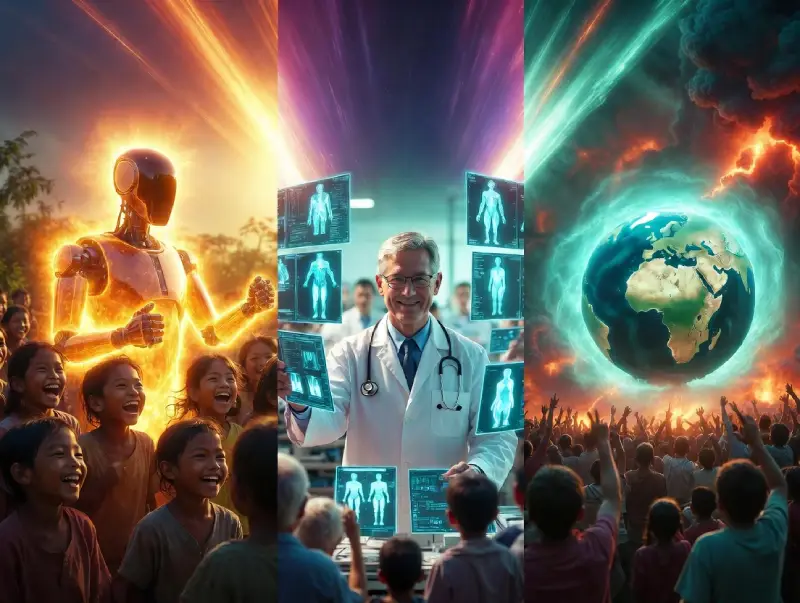
Imagine a child in a remote mountain village who’s never had a teacher show up consistently. Or a single parent juggling three jobs and no time for night classes. These are the quiet failures societies have accepted for too long. Now AI for social impact is changing the picture—not with flashy gadgets, but with tools that actually meet people where they are.
AI Revolutionizing Education and Accessibility

In 2026, AI in education has become the patient tutor that never gets tired. Adaptive platforms listen to a student’s pace, language struggles, or visual impairments and adjust instantly—turning textbooks into spoken stories for the blind or sign-language avatars for the deaf. AI for accessibility isn’t an add-on anymore; it’s the bridge that lets millions who were locked out finally step inside the classroom. The result feels almost unfair in its simplicity: more kids learning, fewer left behind.
AI Advancing Healthcare and Poverty Reduction
A fever in a slum clinic used to mean guesswork and long waits. Today AI in healthcare reads X-rays faster than any radiologist, flags early diabetes from cheap phone photos, and triages patients before the doctor even arrives. For families living on the edge, that speed translates directly into AI for poverty reduction: fewer lost workdays, lower medical debt, a slightly bigger chance to break the cycle. It’s not charity. It’s math working in favor of the people who need it most.
AI Tackling Climate Change and Environmental Challenges
Farmers in drought-stricken regions used to pray for rain and hope. Now satellite feeds, soil sensors, and local weather patterns flow into AI for climate change models that tell them exactly when to plant, how much water to save, which crop might survive. Coastal communities get flood warnings days earlier; cities optimize energy grids to waste less. These aren’t grand heroic gestures—they’re small, stubborn wins that add up, quietly pushing the planet a few steps farther from the brink.
Navigating the Challenges and Risks of AI for Social Impact

We hand skeleton keys to good-hearted folks and then pretend surprise when the wrong door gets jimmied open. AI for social impact is precisely that skeleton key. It swings wide for incredible good. It also swings wide for damage we can’t ignore. I’ve sat through demos that looked flawless on screen only to watch them bruise real people in the field. Those bruises aren’t bugs. They’re features of unchecked speed. Brushing them aside isn’t optimism—it’s playing dumb with people’s lives.
Combating AI Bias and Inequality
One lending model dinged women for career breaks from childcare. Identical profiles. Different fates. Straight-up AI bias masquerading as neutral math. When aid-distribution facial tools falter on darker skin in rainy villages, AI inequality isn’t collateral. It’s the quiet default. Fixing it demands dirty hands: stuffing the model with deliberately mismatched stories, hammering it with red-team attacks till it cracks, and holding deployment hostage until the unfairness can’t hide in the margins anymore.
Preventing AI Misuse and Ethical Dilemmas
A cloned voice of a relief coordinator pleading for funds hijacked a whole WhatsApp relief chain last rainy season—authentic audio, fabricated tears, cash siphoned off. AI misuse seldom struts in with malice. It slips in on expediency or end-of-quarter pressure. “Security” drones that hoard footage forever. Neighborhood risk scores that brand entire blocks. Ethical AI applications aren’t earned through feel-good slides. They require brutal red lines: consent that’s ironclad and readable, data menus laid bare in plain language, and the grit to scrap a shiny project the second the damage clearly overtakes the benefit.
And while we’re wrestling with these ethical knots, the tools themselves keep evolving fast. Many nonprofits start with Free vs Paid AI Tools to test waters—open-source models for quick prototypes, then scaling to paid platforms when reliability and support matter more. The choice isn’t just about cost; it’s about who controls the guardrails and how fast you can respond when something goes sideways.
Real-World Case Studies: AI Driving Social Good

The best proof that AI for social impact works isn’t in white papers. It’s in the lives that didn’t get worse—or actually got better—because someone dared to point powerful code at real suffering. Here are three stories from the field that show what happens when the tech leaves the lab and meets the mess of the world.
AI in Disaster Response: Lessons from Global NGOs
When Cyclone Amphan slammed into the Bay of Bengal in 2020, thousands of villages had only hours to evacuate. The Red Cross and UN teams used satellite imagery fed into AI in disaster response models that predicted flood paths with street-level precision—something no human team could map that fast. Alerts reached phones in local languages before the water rose. Lives were saved not by miracles, but by algorithms that learned from past storms and refused to guess. NGOs now treat these systems as standard equipment, not experiments.
AI Climate Initiatives by Governments
India’s government faced a brutal heatwave in 2025 that killed hundreds and crippled power grids. They turned to AI for social impact through AI climate initiatives running on national supercomputers: models that forecast heat domes days ahead, optimize cooling-center locations, and reroute electricity to hospitals first. Farmers in Rajasthan got SMS warnings to shift irrigation schedules. The death toll dropped noticeably compared to previous summers. Governments are learning that social innovation with AI isn’t luxury—it’s the cheapest form of prevention when the climate refuses to negotiate.
AI for Social Equity in Accessibility Projects
In Brazil, thousands of visually impaired citizens still struggle to cross busy streets safely. São Paulo’s municipal project paired street cameras with AI for NGOs partners to create real-time audio descriptions: “Car approaching from left, 8 meters, slowing down.” Blind pedestrians hear directional cues through bone-conduction headphones. Adoption jumped after the first year because the system was trained on diverse accents and local traffic chaos. Equity here isn’t abstract policy. It’s the difference between staying home forever or walking out the door like everyone else.
Future Outlooks: AI for Sustainable Development and Equity in 2026 and Beyond
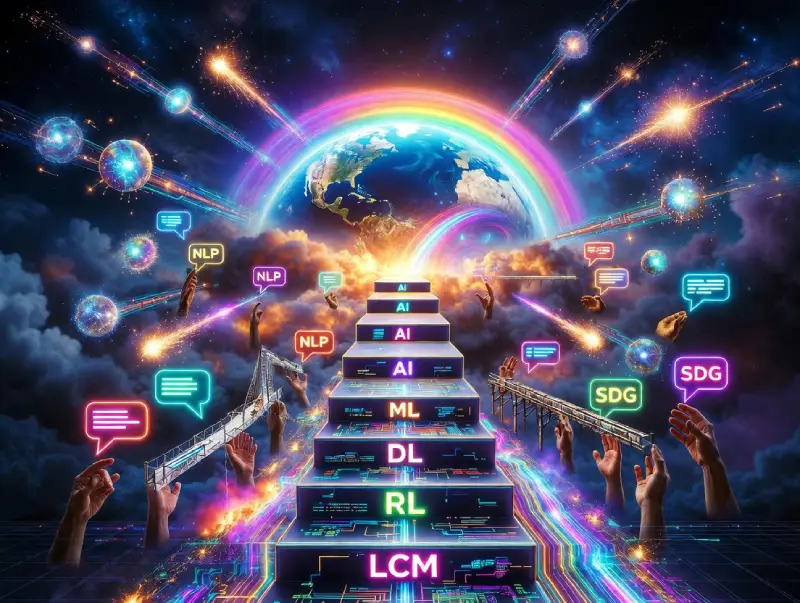
The year 2026 isn’t the finish line—it’s the starting gun for what AI for social impact could really mean at scale. We’re past the pilot phase. Now the question is whether these tools will quietly reinforce old inequalities or finally help close them. Expert forecasts from UN reports and impact investors point to tighter alignment with the SDGs, but only if we stop treating ethics as an afterthought.
A 5-Step Roadmap for Implementing AI for Social Impact
Start small but smart. First, set up a secure, low-carbon environment—cloud credits for nonprofits or local servers to avoid vendor lock-in. Next, pick models that match your mission: lightweight open-source ones for edge devices in remote areas. Then weave in ethical guardrails from day one—bias audits and community consent protocols. Test obsessively with real users, not synthetic data, and optimize for speed without sacrificing fairness. Finally, deploy with monitoring loops that feed back into the system. Success comes when every step relentlessly asks: who gets helped, who gets hurt, and how do we really know?
Enhancing Outcomes with Advanced Techniques
Speed and quality matter when lives hang in the balance. Latent Consistency Models (LCM) cut generation time dramatically, letting NGOs create educational visuals or disaster maps in seconds instead of minutes—crucial when bandwidth is thin. Diffusion pipeline optimization squeezes more accurate results from less data, perfect for generative AI for impact in low-resource settings. Pair these with NLP for social good to translate alerts into local dialects or summarize community feedback instantly. The edge isn’t raw power anymore. It’s getting trustworthy, fast outputs to the people who need them most—without burning the planet or the budget.
Conclusion
We’ve walked through the promise and the pitfalls: how AI for social impact is already saving lives in flood zones, teaching children who never had a teacher, and giving governments a fighting chance against heatwaves that once killed without warning. The tools are here. The data is flowing. The question left hanging in 2026 isn’t whether the technology works—it’s whether we have the collective spine to steer it toward equity instead of letting it drift toward the highest bidder.
The path forward isn’t complicated, but it demands discipline. Audit relentlessly. Listen to the people the models are supposed to serve. Pull the plug without hesitation when harm outweighs help. And remember: every nonprofit, every government department, every coder reading this can tip the balance. Start small—experiment with open models, join ethical coalitions, push your organization to prioritize fairness over speed. The future isn’t written yet. It’s being coded right now. Make sure the code reflects the world we actually want.
What’s one step you—or your team—can take this month to bend AI toward real good? Drop a comment below; let’s build the momentum together.