
Ever heard of a “get rich quick” scheme that actually works? That’s exactly what the “3-week miracle” in AI software engineering feels like – too good to be true.
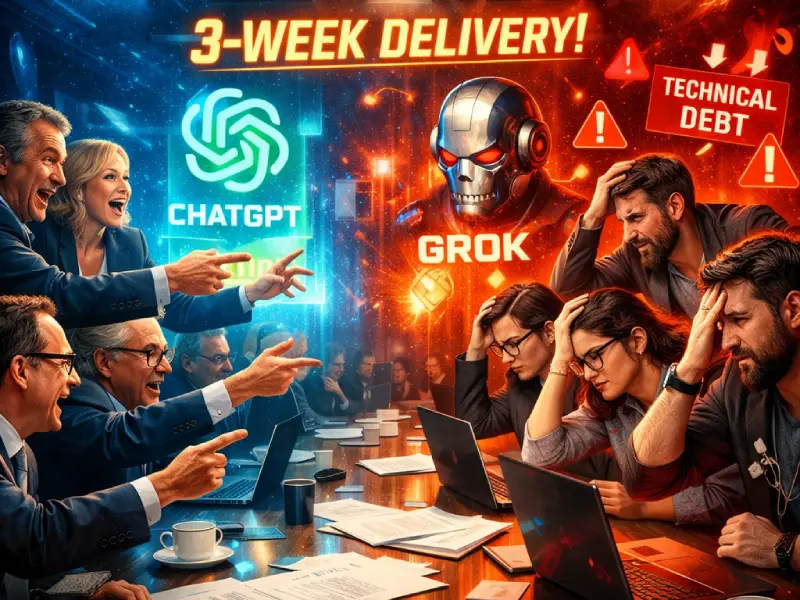
Last week, in a tense meeting, management dropped the bomb: a complex 6-month backend project had to ship in just 2 months. “Why not use ChatGPT for coding or Grok?” they asked. “You could finish it in 3 weeks.” I pushed back hard. AI coding assistants are brilliant for boosting quality, but rushing without human oversight is like building on quicksand – it piles up crippling technical debt fast. As we head into the future of software engineering, this gap between hype and reality is only growing wider.
Table of Contents
The Hype Around AI in Software Development: Separating Fact from Fiction
We’ve all been there—scrolling through headlines that scream AI is about to wipe out entire professions. In software development, that noise is louder than ever. Executives point to flashy demos and promise miracles. But let’s cut through it.
Exploring AI Software Engineering Myths
Remember my meeting last week? The one where a six-month backend project got squeezed into a “three-week sprint” because “AI can handle it”? That’s the myth in action. People outside the trenches imagine AI in software development as some autopilot that cranks out perfect systems overnight. It’s not. Sure, tools have come a long way, but they haven’t magically erased the hard parts.
As we’ve moved through 2025 and now look toward 2026, I’ve leaned heavily on AI myself. It’s optimized my code, suggested smarter patterns, and pulled from best practices I might’ve missed. Quality? Absolutely up. But has any tool suddenly built a full web app from scratch—backend, frontend, DevOps, the works? Not even close. Maybe we’ll see bigger leaps soon, but in real-world ai software engineering, that full automation still feels distant.
How AI Coding Tools Are Changing the Game – But Not Replacing It
AI coding tools are game-changers, no doubt. They’re like that sharp pair of scissors in a stylist’s hand—precise, fast, and they make the job smoother. But they don’t replace the stylist. Same here. Will AI replace programmers? That’s the big question echoing everywhere, from Reddit threads to executive boardrooms.
The short answer: No. Not fully. Reports this year show AI boosting productivity—sometimes by 30% or more—but it’s amplifying human work, not erasing it. AI handles boilerplate brilliantly, refactors with ease, and spots bugs quicker. Yet, when it comes to the nuanced stuff—understanding business logic, ensuring scalability, or weaving security throughout—human insight still rules.
The Risk of Over-Reliance: AI and Programming Jobs in the Future
Here’s where it gets tricky. The AI impact on programming jobs is real, especially for juniors and mid-level roles. Some big names have talked about replacing mid-tier engineers or pausing hires thanks to productivity gains. Entry-level spots have tightened; companies figure one experienced dev plus AI equals what used to take a small team.
Over-rely on it, though, and you’re asking for trouble. Rush a complex project with AI-generated code without proper oversight? You’re inviting chaos—brittle systems, hidden vulnerabilities, the works. AI replacing programmers wholesale? Unlikely. AI replace software engineers in routine tasks? Already happening. But the core—creative problem-solving, empathy for users, long-term vision—that’s staying human.
In the coming years, the reality in ai software engineering will be collaboration, not conquest. AI excites me, but it hasn’t made my expertise obsolete. If anything, it’s made thoughtful engineers more valuable than ever.
Real-World Applications of AI Software Engineering

I’ve spent years wrestling with backend systems, and AI tools have become part of the daily grind—helpful, but never the whole solution.
Building with AI: From Boilerplate to Complex Architectures
AI coding tools excel at the grunt work: cranking out boilerplate for APIs, database schemas, or authentication flows in minutes. Push further into complex architectures, though—like designing for massive scalability or tricky edge cases—and ai assisted coding starts to show limits. It can suggest solid starting points or refactor tangled code effectively, but the real decisions on long-term maintainability still fall to human devs. Beginners should dive in early; ai tools for beginners make learning ai programming far less painful.
ChatGPT for Coding: A Practical Assistant, Not a Standalone Solution
ChatGPT for coding has saved me hours brainstorming algorithms or debugging stubborn issues—it’s a reliable ai code assistant for quick ideas and analysis. Yet, as the models themselves often point out, human thinking diverges sharply from machine patterns, especially on nuanced business logic. That painful meeting two weeks ago drove it home: folks assuming AI could fully take over a dev’s role.
AI Software Engineering in Action: Case Studies from Salon Tech Transformations
In one salon booking app project, we used the best ai coding assistant to prototype auth and payment integrations fast. A coding ai helper handled repetitive tasks smoothly, getting us 70-80% of the way. But custom stylist matching and real-time inventory syncs needed heavy human iteration to avoid vulnerabilities.
Another beauty tech overhaul: ai programming assistant sped up query optimizations for stock predictions. Free ai coding assistant options worked great for initial drafts. End result across both? Robust, debt-free systems built through true collaboration in ai software engineering.
Pro Tip Box: Start small—use a free coding ai helper for daily tasks like refactoring. Pair it with code reviews to catch what AI misses. You’ll boost speed without sacrificing quality.
The Persistent Challenge of Technical Debt in AI-Driven Projects
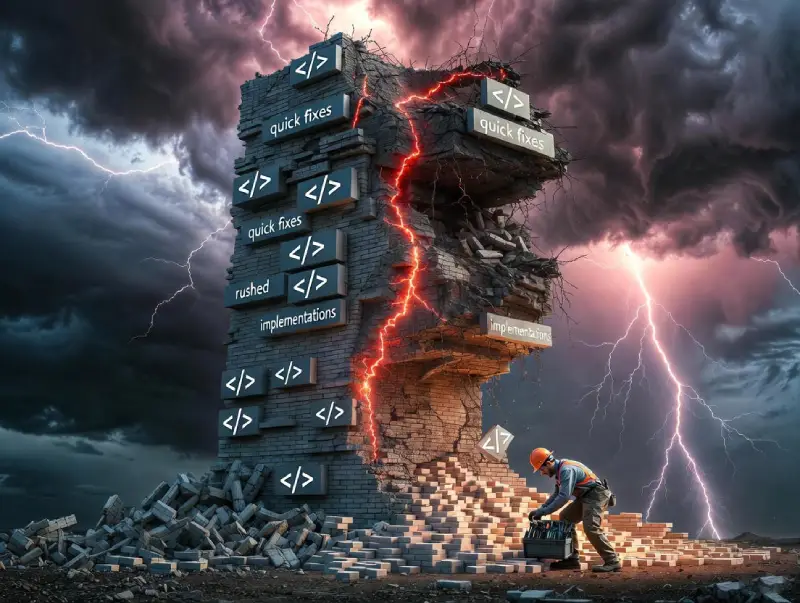
You know that sinking feeling when a quick fix bites you months later? That’s technical debt in a nutshell—and rushing with AI makes it worse.
Defining Technical Debt in the Age of AI
Technical debt—tech debt meaning those shortcuts you take for speed that cost you big in maintenance later—hasn’t vanished in ai software engineering. The technical debt definition stays the same: accumulated cost of rework from choosing easy solutions now over better ones. AI speeds generation, but often at the price of messy, hard-to-maintain code if you don’t watch closely.
Examples of Technical Debt from Rushed AI Implementations
I’ve seen it firsthand in ai chatbot development. One team hammered out a Python AI chatbot using rapid AI prompts—basic flows worked fast. But under the hood? Duplicated logic, weak error handling, no modular design. Months later, adding new intents turned into a nightmare: endless refactoring, security holes popping up.
Another case hit during ai chatbot programming for a client app. We rushed integrations with AI-generated snippets. Result? Brittle dependencies and scalability issues when user load spiked. Programming chatbot features sounded simple, but skipping human review piled on technical debt examples like untested edge cases and logic leaks that crashed production.
Mitigating Tech Debt: Human Expertise as the Ultimate Safeguard
Pro Tip Box:
- Always review AI output line-by-line—treat it like junior dev code.
- Pair tools wisely: I use Grok heavily for documentation and deep reasoning, ChatGPT for quick code drafts. (We compared Grok vs ChatGPT in detail here—different strengths, no single winner.) Gemini, Claude, Deepseek round out the “team” for specific tasks.
- Some challenges only human minds solve. I’ve lost count of times AI couldn’t grasp my intent fully—forcing me to step in and architect properly.
- Enforce standards: Modular code, tests, security scans—no shortcuts.
Human oversight remains the real brake on runaway debt.
AI as a Collaborator: Building Sustainable Software for the Future

Imagine staring at a codebase that’s grown wild over years—tangled, inefficient, begging for a refresh. That’s where AI steps in smartly, helping build sustainable systems without the usual pitfalls.
How to Build AI Software Without Accumulating Debt
Focus on modular design from the start. When figuring how to build AI software, integrate tools early for ideation and analysis—they reduce challenges by suggesting clean paths, but always vet outputs to avoid brittle code. I’ve treated AI like a sharp friend: ask it questions, get solid breakdowns, and it points the right way without overpromising. This keeps quality high and debt low in ai software engineering.
AI in Learning and Development: Upskilling for Tomorrow’s Engineers
AI in learning and development transforms how devs grow. Free ai coding assistant options let juniors experiment safely, mastering ai and computer science basics through guided practice. Pros use them to refine skills on complex tasks like how to build an ai agent or how to build an ai bot—turning solo coding into a collaborative drill.
I’ve seen teams treat these tools as virtual teammates, analyzing problems and boosting daily work. But remember, they’re enhancers, not replacers—future-proofing ai and programming jobs by making humans sharper.
The Future of Software Engineering: Human-AI Partnerships
Ignore the hype around auto-generators; those front-end spit-outs are just templates, lacking solid coding or backend muscle. The future of software engineering lies in partnerships—AI handling rote stuff, humans driving creativity.
AI Software Engineering Tools for Beginners and Pros Alike
Pro Tip Box:
- Start with free tools like ChatGPT to build ai assistant prototypes—great for beginners.
- For pros, explore advanced options (check this guide on AI tools evolution for 2025 updates).
- Always pair with human review: AI improves quality, cuts challenges, but can’t fully grasp unique intents.
Conclusion
As we close out this look at ai software engineering, the truth hits home: AI won’t magically compress a six-month backend project into weeks—it’s a collaborator that boosts code quality, optimizes patterns, and eases daily grind when guided by human hands. That tense meeting reminded me why rushing invites disaster, piling on technical debt that haunts later. In the future of software engineering, success comes from partnership: AI as a sharp teammate handling rote tasks, humans owning the creative, nuanced decisions. What’s your experience? Drop a comment—how has AI shaped your workflow, for better or worse?